
Repair note
Why long-stored drives need their capacitors reformed
A spare drive that sat on the shelf for a year can fail the moment it is switched on. Here is why, and what we do about it.
28 September 2026 · Electronic Point, Adityapur
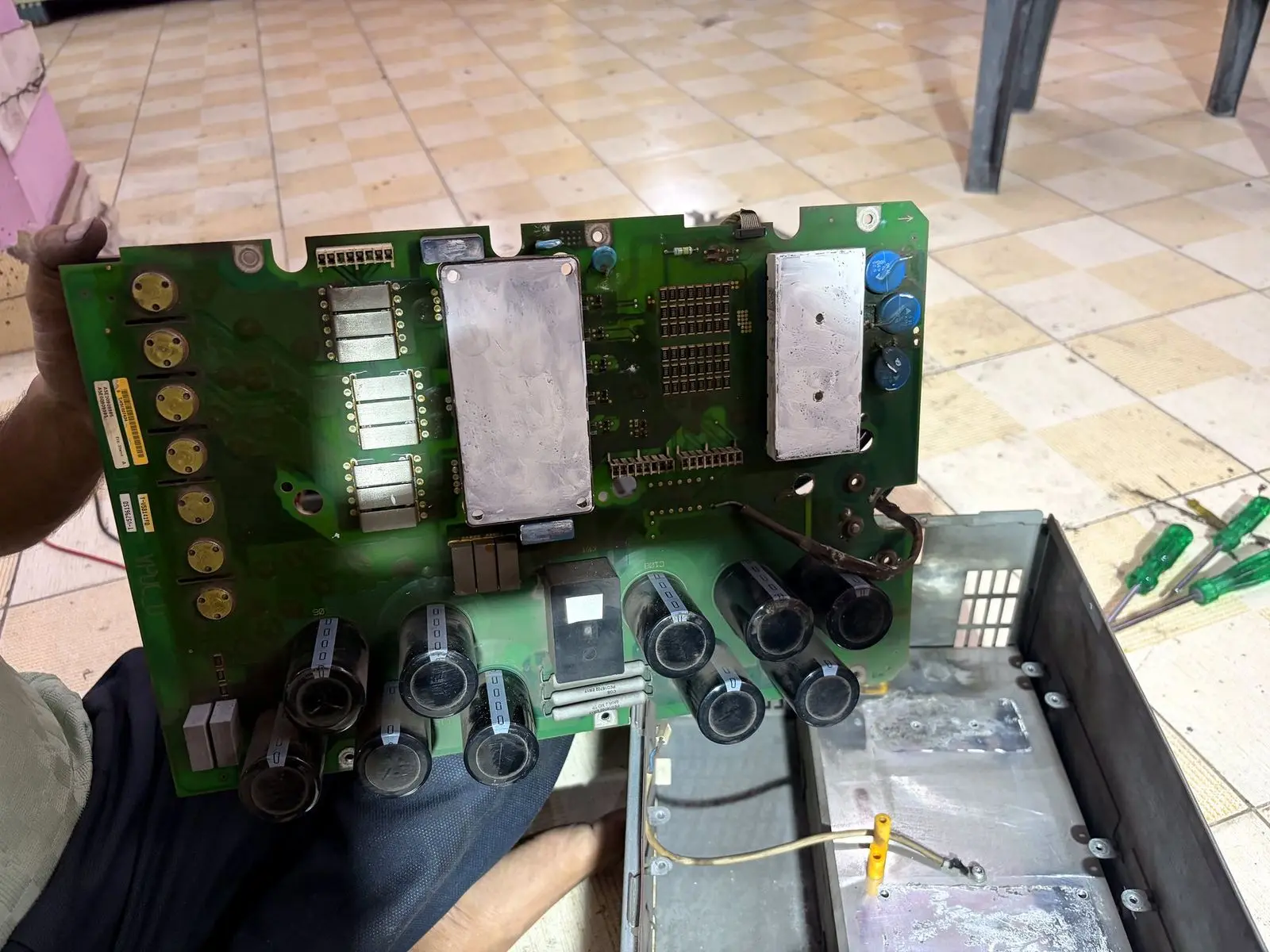
Most plants keep a spare drive for their critical lines. It sits in the store, still in its box, until the day it is needed. That day is exactly when it is most likely to fail.
What happens inside the capacitor
The DC bus of a drive is built on large aluminium electrolytic capacitors. Their insulating layer is a thin oxide film on the aluminium foil, and that film is kept healthy by the voltage applied to it in service. Left without voltage for a long time, the film slowly degrades. Apply full DC-bus voltage suddenly and the leakage current through the weakened film can be high enough to overheat the capacitor, vent it, or take out the rectifier with it.
Reforming
Reforming means bringing the voltage up gradually, with the current limited, so the oxide film rebuilds before the capacitor sees full voltage. Drive manufacturers publish their own reforming procedures, usually required once a drive or a spare capacitor has been stored for more than about a year.
In the workshop we reform capacitors from a controlled, current-limited supply, and measure capacitance and ESR afterwards. Capacitors that do not recover are replaced with matched parts before the drive is powered up.
What this means for your spares
If a spare drive has been in the store for a year or more, do not simply install it and switch it on during a breakdown. Send it to us beforehand, or ask us to reform it on site. It takes far less time than recovering from a failed first power-up.