
Repair note
What a full-load test catches that a bench power-up misses
A repaired drive that powers up and shows a healthy display can still fail on the first start at site. Why we run every repaired drive at rated current before it leaves.
28 September 2026 · Electronic Point, Adityapur
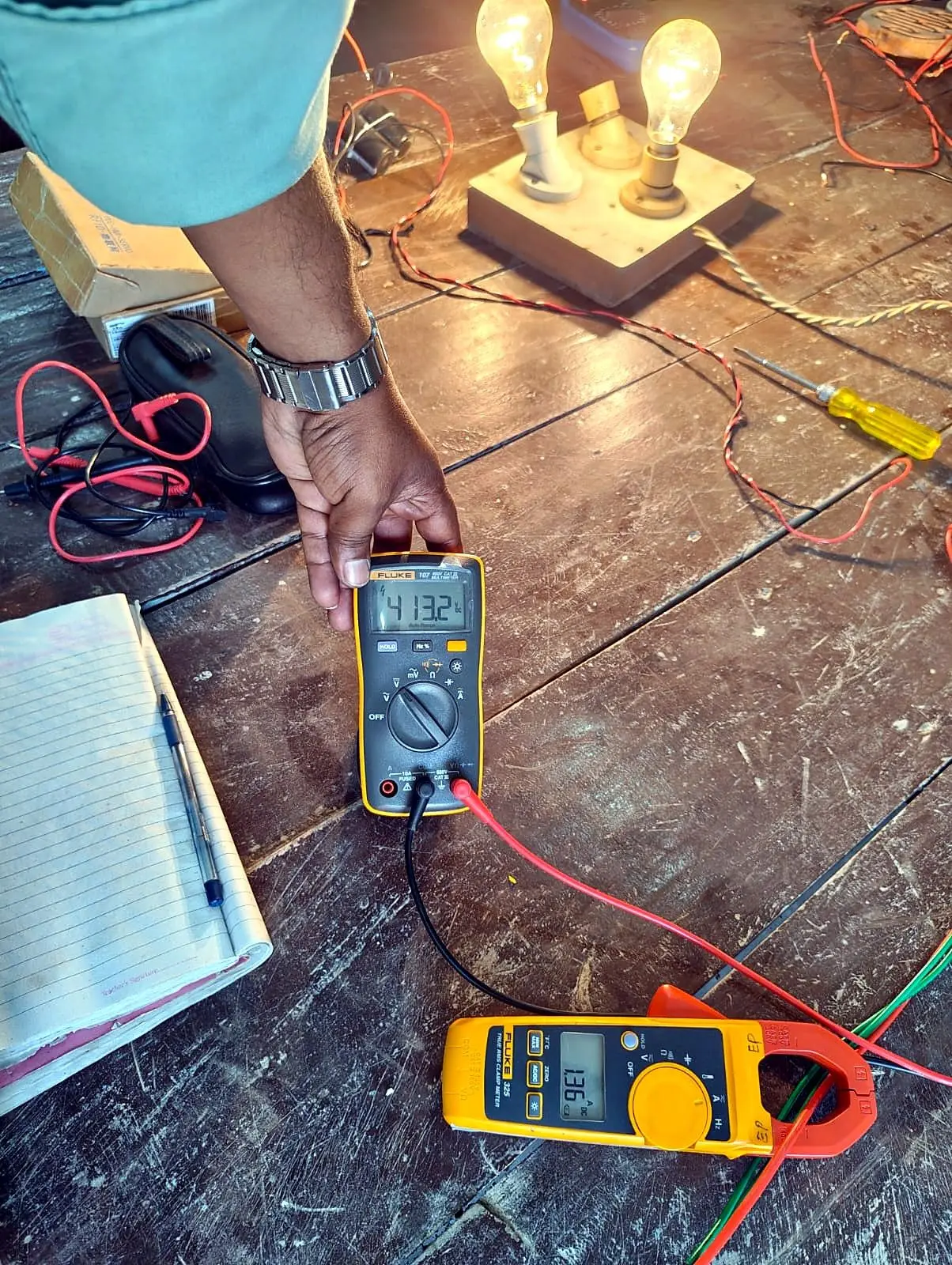
The cheapest way to “test” a repaired drive is to power it up, see the display come on, perhaps spin a small motor with no load, and ship it. Many faults pass that test.
Faults that only show under load
- A weak IGBT or a marginal gate drive. It switches correctly at a few amps and fails when the current rises.
- Thermal faults. A dried thermal interface, a slow fan or a failing temperature sensor only shows up after the heatsink has had time to warm.
- DC-bus problems. Capacitors with high ESR can look fine at no load and cause ripple, overvoltage trips or heating at rated current.
- Current feedback errors. A drifting current sensor can go unnoticed until the drive is asked to deliver real torque.
Our routine
Every drive we repair goes through the same steps before dispatch:
- No-load power-up, checking output voltage, frequency and waveform
- A test motor matched to the drive’s rating
- Full load at rated current for at least 30 minutes
- IGBT and heatsink temperatures checked under load
- Parameters verified against the customer’s settings
- A written report with input and output measurements
It takes longer than a bench power-up. It also means the first time your drive meets real current is in our workshop, not on your line.